
BMAN Peace Pledge, Boys Education & Development, Social Advocacy
After the Suspension: What New York Owes Boys Like Javits Frimpong
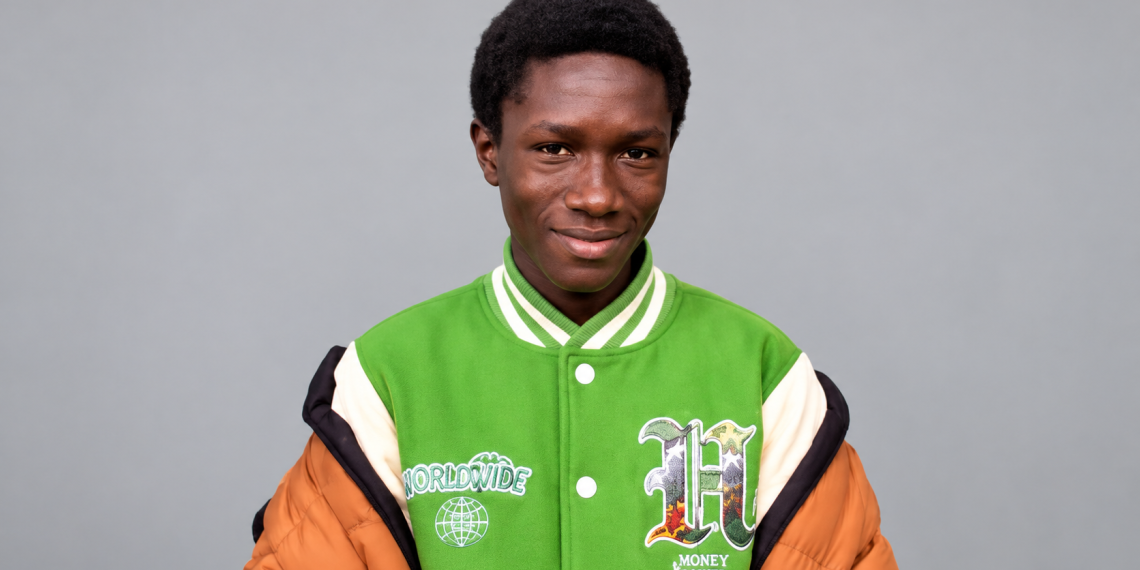
On the morning of Thursday, October 29, Javits Frimpong set off for school. Near Crotona Park in the Bronx he was shot in the stomach. He ran about a block before he collapsed. He was 15.
He had been in New York for about a year. His father, Thomas, a yellow-cab driver, had brought him from Ghana so they could build a life together; his mother remains in Ghana. In pages from his journal published after his death, Javits described himself as shy. He liked reading. He wrote that he wanted to “go really far with education,” and he called his family a treasure.
The police have not said why he was killed. As this is written they are still looking for the three teenagers they believe were involved. But his father has said something in public that deserves an answer, whatever the investigation finds. Mr Frimpong says the principal told him, three days before the shooting, that two students had been bullying his son and had been suspended for a week. He says he was told Javits had been defending himself.
No one has established that the bullying and the shooting are connected, and that distinction matters. Yet the question his father’s account raises does not depend on it. When a school learns that a child is being bullied, and acts, what happens to that child next?
The week after
A suspension ends. The students return. The boy who was targeted still walks the same corridors and the same streets to school. Who checks on him in the first week? Does anyone sit down with him and his family to agree how he will be kept safe? Does a father who works long hours, and may not know how the system works, know whom to call if the trouble follows his son beyond the school gate?
In too many schools the honest answer is that it depends on whether one particular adult cares enough to follow up. I say that as someone who works in schools, not as someone throwing stones at them. I run a boys’ mentoring organisation in Lagos, Nigeria, and the same gap exists in our classrooms. A policy is written for every child. Follow-up usually happens for the lucky ones.
For a newcomer that gap is wider. Javits had been in the country a year. He was still learning the unwritten rules: how to talk, whom to trust, which arguments to walk away from and which ones follow you home. Children from Ghana, Haiti, Bangladesh and the Dominican Republic arrive in New York classrooms every term hoping to belong. Many have one parent here, not two. Many of their parents are unsure of their rights or wary of institutions. A child in that position is less likely to report, and his family is less likely to push when a report goes quiet. The system, as it stands, asks the most vulnerable to navigate it alone.
What would close the gap
New York already has anti-bullying policies, counsellors and procedures. The problem is not the absence of rules. It is what happens in the weeks after a child speaks up — the stretch of time when the suspension ends and the targeted child is left to walk the same corridors again. Three changes would go a long way.
First, when a student is suspended for bullying, the student who was targeted should have a written safety plan before the suspended students return. It should be agreed with the family, in a language they understand, and reviewed a few weeks later. The plan must not depend on one kind teacher remembering to check in.
Second, every newly arrived student should be told, early and plainly, how to report bullying and what will happen when they do. Their parents should be told too, in their own language. Silence should never be the default for a child who does not yet know the system.
Third, schools should teach the behaviours that make bullying harder to sustain, and take that teaching as seriously as discipline. A suspension deals with what has already happened. It does not teach a fourteen-year-old how to handle his anger, how to disagree without humiliating someone, or how to step in when a classmate is being picked on.
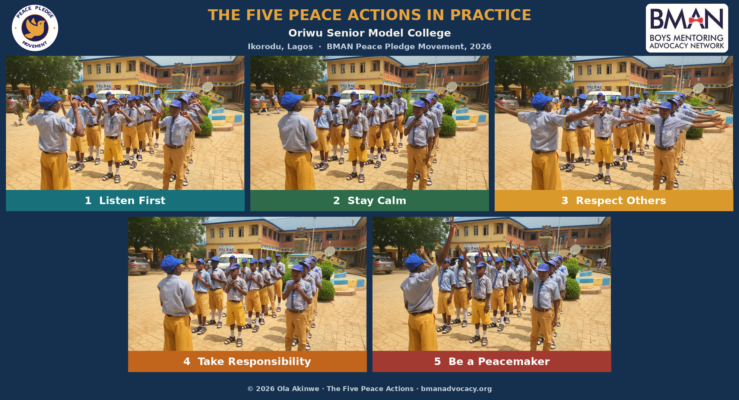
That third point is the work I know best. In Lagos we have built a programme around five commitments: listen first, stay calm, respect others, take responsibility and be a peacemaker. Students practise them together as simple physical actions at assembly, work through them over five weeks with their school counsellors, and then sign a pledge in front of witnesses: “I will strive to listen first, stay calm and respect others. I will take responsibility and be a peacemaker. Today, I choose peace.” More than 300 counsellors have been trained across Lagos State’s six education districts, with the endorsement of the state’s Ministry of Basic and Secondary Education.
It has limits, and they should be stated plainly. A pledge does not protect a child who is being threatened. A poster cannot replace a safeguarding procedure. No student should ever be asked to investigate bullying or face down a threat himself; that is the job of adults. What the programme offers is a shared language for how people treat one another, so that cruelty has fewer places to hide.
A question for the Chancellor
New York’s schools chancellor, Kamar H. Samuels, leads the largest school system in the United States, and one of the most international. He has an opportunity that goes beyond condolences: to ask every school what happens, concretely, to a child after bullying is reported and acted on, and to make sure the answer does not depend on luck. The next boy who is bullied should not have to rely on one kind teacher. He should be able to rely on the system around him.
My organisation would gladly share its materials, and what we have learned, with any New York school or district team that wants to adapt them and test them properly, with its own educators and safeguarding staff in charge.
An essay from Lagos will not change New York’s schools. But Javits’s story is not only a New York story. It belongs to every boy who crosses an ocean carrying a parent’s hopes and then has to work out, largely on his own, whether the adults around him will keep him safe. Boys like him sit in classrooms in Lagos and Accra too.
A school knew that a boy was being bullied, and it acted. Whatever the investigation concludes, his death leaves the harder question of what we owe a child after that.
The next boy who is bullied should not have to rely on luck. He should be able to rely on the system around him.
Ola Akinwe is the founder and president of the Boys Mentoring Advocacy Network (BMAN), which runs the Peace Pledge Movement in public secondary schools across Lagos State, Nigeria.
