
BMAN Peace Pledge, Boys Education & Development, Global Advocacy & Commentary, Parenting & Family, Social Advocacy
Our Schools Teach Children to Pass Exams. Who Is Teaching Them Not to Hurt Each Other?
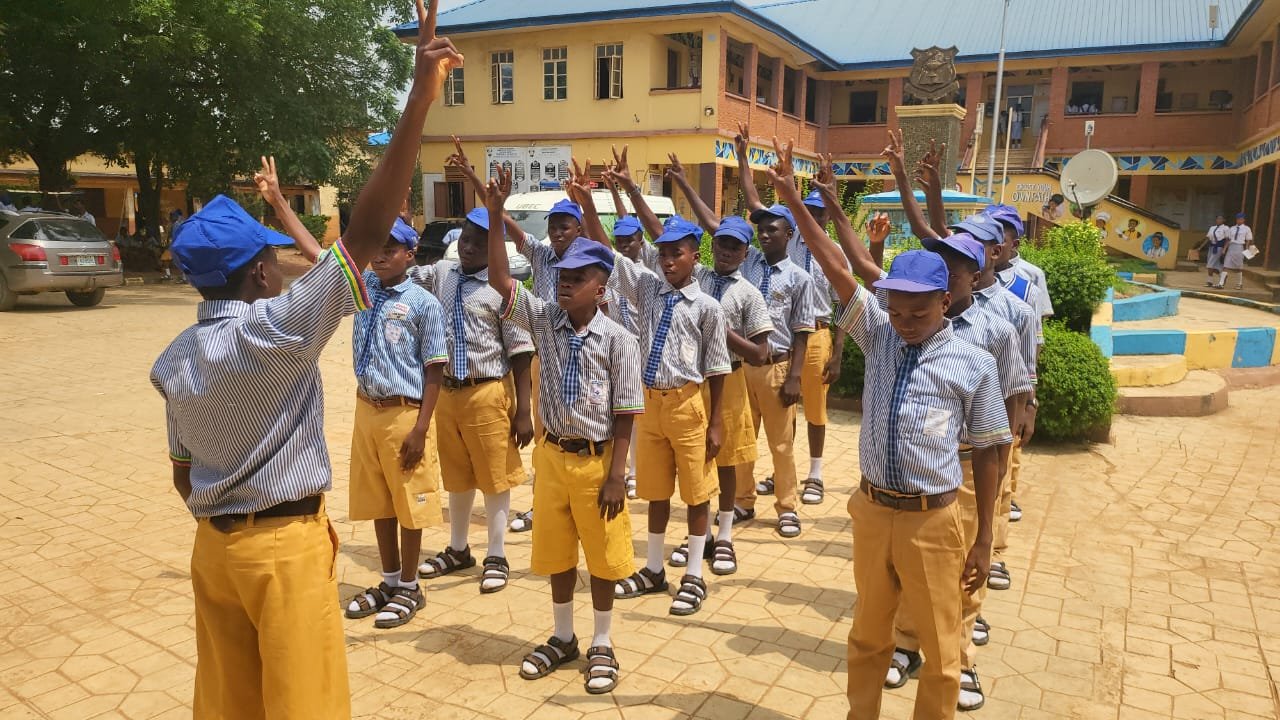
EVERY SCHOOL HAS A VERSION OF THIS moment. A boy is pushed in the corridor. Words are said about his accent, his family or his body. He pushes back, or he goes quiet. By the time an adult finds out, there is a fight to sort out, a parent on the phone and a punishment to decide.
We are good at the punishment. We are much less practised at what comes before it: teaching children, deliberately and every week, how to handle anger, how to disagree without humiliating someone, and what to do when they see a classmate being picked on.
That is the gap I am writing to you about.
The numbers behind the moment
In Nigeria’s national Violence Against Children Survey, about six in ten children said they had experienced physical, emotional or sexual violence before they turned 18. Most of them experienced it more than once. And according to UNICEF, fewer than five in every hundred children affected receive the help they need to recover. Most never tell anyone.
Not all of that happens at school, and none of it is any one school’s fault. But schools are where children spend most of their waking hours with each other. If we want to change how young people treat one another, school is where the practice has to happen.
“We are good at the punishment. We are much less practised at what comes before it.”
A policy is not a culture
Most schools already have an anti-bullying policy, a guidance and counselling unit, rules and consequences. Those things matter. But a child can sit through an anti-bullying assembly and still not know what to do with his anger when he is provoked at break time. A school can have a counsellor and still lack a shared, everyday language that teachers and students use to correct behaviour before it becomes harm.
The problem is rarely good intentions. It is the lack of something simple, repeated and practised.
Five actions a whole school can share
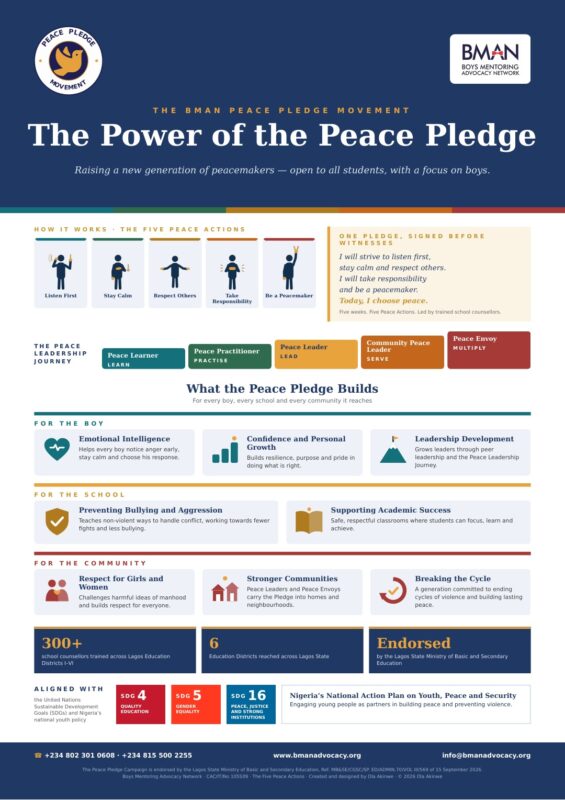
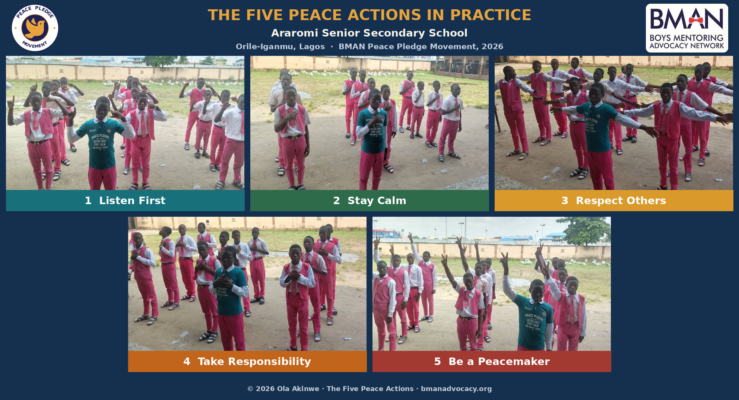 The BMAN Peace Pledge Movement gives schools exactly that. It is built around five commitments, each with a simple physical action that students learn and perform together:
Listen First — understand before you judge.
Stay Calm — feel the anger, then choose what to do with it.
Respect Others — no one’s accent, family or background is a reason for humiliation.
Take Responsibility — own what you did, and help put it right.
Be a Peacemaker — step in, calm things down, and get an adult when it is serious.
Students practise the actions at assembly, work through one commitment a week over five weeks with their school counsellor, and then sign the Peace Pledge before witnesses:
“I will strive to listen first, stay calm and respect others. I will take responsibility and be a peacemaker. Today, I choose peace.”
Students who show real leadership grow along the Peace Leadership Journey, from Peace Learner to Peace Envoy, and serve in supervised Peace Leadership Cells in their schools. The Movement is open to all students, with a focus on boys.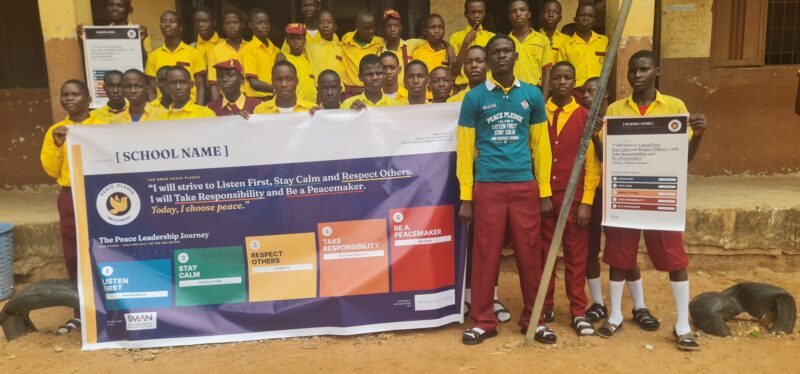
It is not a replacement for discipline, counselling or child protection. A pledge does not protect a child who is being threatened, and no student should ever be asked to investigate bullying. That is the work of adults. What the Movement does is give a whole school one language for how people treat one another, so that cruelty has fewer places to hide.
It is already working in Lagos
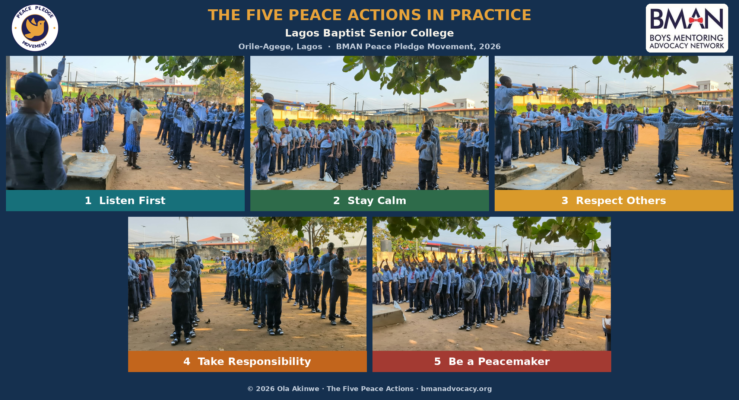
More than 300 school counsellors have been trained across all six Lagos Education Districts. The Peace Pledge Campaign is endorsed by the Lagos State Ministry of Basic and Secondary Education. From Ikorodu to Epe, Alimosho to Ibeju-Lekki, students are practising the Five Peace Actions on their assembly grounds, often led by their own classmates.
To principals, counsellors and school boards
To the counsellor: you are usually the first person called when a child is struggling. This gives you a tool to reach every student before the crisis, not only the few who end up in your office.
To the principal and the board: a safe, respectful school cannot be left to one department. It needs a decision from the top.
“Do not wait for the next fight, the next phone call or the next child who stops coming to school.”
 What we are asking you to do this term
Peace in schools will not happen by accident, and it will not wait for next year. Here is where to start:
- Book a free 20-minute briefing with BMAN for your principal and counsellor. We will walk you through the Five Peace Actions, the five-week programme and the Peace Leadership Journey.
- Name one person in your school, a counsellor or pastoral lead, to coordinate the Peace Pledge.
- Adopt the Peace Pledge as school policy, linked to your existing anti-bullying and child-protection procedures, and review it each term.
TAKE THE FIRST STEP
Call or WhatsApp: +234 802 301 0608 · +234 815 500 2255
Email: info@bmanadvocacy.org
Know a principal or counsellor who should read this? Share it with them today.
Every school says it wants peace. The ones that get it are the ones that practise it, every week, until it becomes the way things are done. Let your school be one of them.
Ola Akinwe is the founder and president of the Boys Mentoring Advocacy Network (BMAN), which leads the Peace Pledge Movement in secondary schools across Lagos State, Nigeria. Schools interested in adopting the framework or booking a free 20-minute administrative briefing can reach BMAN via info@bmanadvocacy.org or +234 802 301 0608..
