
Boyhood, Boys Education & Development, Fatherhood, Manhood, Masculinity, Parenting & Family
The Boy Behind the Behavior: Understanding Difficult Boys Before We Lose Them
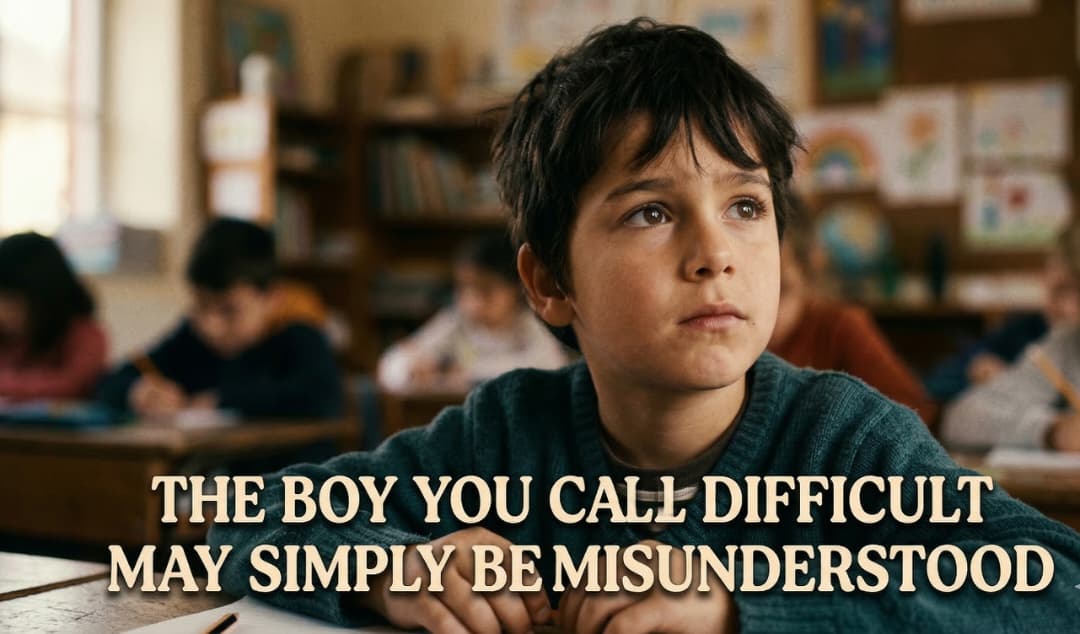
A boy who seems “difficult” at home or in the classroom may not be a problem at all—he may simply be a personality that has not yet been understood. As a mentor for boys and the founder of the Boys Mentoring Advocacy Network (BMAN), I hear the same questions from parents, educators, and caregivers again and again.
These questions usually come from people who deeply love the boys in their care, yet they are often asked in moments of frustration and exhaustion. “Why won’t he listen?” “Why is he so difficult?” “Why can’t he be more like his brother?” What we often notice first is behavior on the surface—the anger, the defiance, the restlessness, the quiet withdrawal, or the constant need for attention.
In response, adults frequently rush to label the boy instead of understanding him. He becomes “the problem,” “the bully,” “the lazy one,” “the daydreamer,” or “the difficult child.” Soon everyone around him begins trying to fix him. Teachers correct him. Parents discipline him. Adults lecture him about how he should behave. Yet in the middle of all these efforts, the boy himself begins to internalize a painful message: something must be wrong with me.
In many cases, however, the real issue is not the boy but the way his personality is being interpreted. After years of mentoring boys through BMAN, I began noticing a powerful pattern. Many of the boys who were labeled “difficult” were not broken at all—they were misunderstood. Their behavior often reflected deeper personality traits that no one had taken the time to recognize.
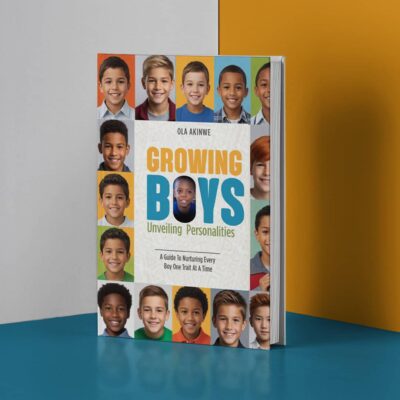 That realization is what led me to write Growing Boys: Unveiling Personalities. The purpose of the book is not to create new labels for boys, but to help parents, teachers, and mentors finally see the boy behind the behavior.
In the introduction of the book, I share the story of Samuel. At seven years old, his teacher had already labeled him a “problem.” He could not sit still in class. He dismantled pens simply to see how they worked. He stared out the window during lessons instead of focusing on the board. At home, his parents were worn out by his endless energy and his tendency to test rules. Everyone around him asked the same question: why is this boy so difficult? Yet a closer look revealed something very different.
Samuel was not a problem; he was an Adventurer with the mind of an Analytical Thinker. He was curious, experimental, and deeply interested in understanding how the world worked. The behaviors adults interpreted as defiance were often expressions of exploration. What looked like distraction was frequently curiosity searching for stimulation. The classroom expected quiet conformity, but Samuel’s mind was wired for discovery.
Stories like Samuel’s point to a larger challenge facing boys today. In many ways, we are witnessing an epidemic of misunderstanding boys. Too often, boys are expected to fit into a narrow, one-size-fits-all script of masculinity.
When they are energetic, they are labeled disruptive. When they show emotion, they are told to toughen up. When they are quiet, they are assumed to be disengaged. Yet boys are not one-dimensional. They are diverse personalities trying to find their place in a complex world. When those personalities are misunderstood, adults sometimes suppress the very qualities that could later become their greatest strengths.
Frederick Douglass once observed that “it is easier to build strong children than to repair broken men.” That insight remains deeply relevant today. The responsibility before us is to build strong children now by learning to understand them more deeply.
This is the purpose of Growing Boys: Unveiling Personalities. The book is not a collection of rigid labels; it is a collection of keys designed to unlock empathy and insight. It introduces twenty-eight personality archetypes that help parents and educators understand what drives a boy’s behavior.
Within its pages, readers discover why the boy we call a bully may actually be masking deep insecurity, why the overachiever may be driven by a hidden fear of failure, and why the quiet boy may possess a rich inner world he is simply waiting for a safe moment to share.
Each chapter moves beyond theory and provides practical guidance, including real-life case studies, behavioral insights, and strategies that help adults nurture a boy’s strengths rather than fight against his nature. When a boy’s personality is understood, the dynamic changes. Adults stop seeing a problem to control and begin seeing a young person whose potential can be guided.
Consider the boy in your own life for a moment. He might be the quiet one who rarely speaks up, the rebellious one who constantly challenges authority, or the boy who always seems to be getting into trouble. In many cases, the very traits adults try to suppress are closely connected to the strengths that will shape the man he becomes.
Every boy needs at least one adult who looks beyond the labels and truly sees him—someone who says, “I understand you.” That is the mission at the heart of the Boys Mentoring Advocacy Network. When you purchase Growing Boys: Unveiling Personalities, you are not only gaining a powerful guide to understanding boys, you are also helping support our work to mentor and advocate for boys who need someone to believe in them.
The conversation about boys must change, and it must start now. If you are raising a boy, teaching a boy, or mentoring a boy, this book will challenge the way you see him and may change the course of his future.
If you are raising a boy, teaching a boy, or mentoring a boy, this book will transform how you understand him. Growing Boys: Unveiling Personalities offers practical insight into the personalities that shape boys’ behavior and provides tools to guide them toward their strengths instead of fighting against their nature. Your purchase not only equips you with these insights—it also supports the work of the Boys Mentoring Advocacy Network (BMAN) in mentoring and advocating for boys who need guidance and belief in their potential.
Get your copy of Growing Boys: Unveiling Personalities, share this message with a parent, teacher, or mentor, and join us in building a world where every boy feels seen, understood, and valued.
#GrowingBoys #RaisingBoys #ParentingBoys #ChildDevelopment #BMAN #OlaAkinwe
.
